Author: admin
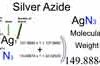
Silver Azide (AgN3) Molecular Weight Calculation

Silver azide [AgN3] is an inorganic compound of two elements: Silver and Nitrogen. The molecular weight of Silver azide is 149.88842 which can be calculated by adding up the total weight (atomic weight multiplied by their number) of Silver and Nitrogen.
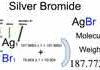
Silver Bromide (AgBr) Molecular Weight Calculation
Silver bromide [AgBr] is an inorganic compound of two elements: Silver and Bromine. The molecular weight of Silver bromide is 187.7722 which can be calculated by adding up the total weight (atomic weight multiplied by their number) of Silver and Bromine.
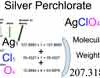
Silver Perchlorate (AgClO4) Molecular Weight Calculation
Silver perchlorate [AgClO4] is an inorganic compound of three elements: Silver, Chlorine, and Oxygen. The molecular weight of Silver perchlorate is 207.3185 which can be calculated by adding up the total weight (atomic weight multiplied by their number) of Silver, Chlorine, and oxygen.
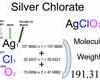
Silver Chlorate (AgClO3) Molecular Weight Calculation
Silver chlorate [AgClO3] is an inorganic compound of three elements: Silver, Chlorine, and Oxygen. The molecular weight of Silver chlorate is 191.3191 which can be calculated by adding up the total weight (atomic weight multiplied by their number) of Silver, Chlorine, and oxygen.
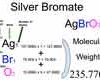
Silver Bromate (AgBrO3) Molecular Weight Calculation
Silver bromate [AgBrO3] is an inorganic compound of three elements: Silver, Bromine, and Oxygen. The molecular weight of Silver bromate is 235.7704 which can be calculated by adding up the total weight (atomic weight multiplied by their number) of Silver, Bromine, and oxygen.
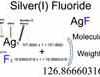
Silver(I) Fluoride (AgF) Molecular Weight Calculation
Silver(I) fluoride [AgF] is an inorganic compound of two elements: Silver (Ag) and Fluorine (F). The molecular weight of Silver(I) fluoride is 126.866603163 which can be calculated by adding up the total weight (atomic weight multiplied by their number) of Silver and Fluorine.

Topic: Helicobacter pylori
NOTES Helicobacter pylori Helicobacter species Discovery of Helicobacter pylori Co-evolution of Helicobacter pylori and Modern Humans List of Helicobacter pylori…
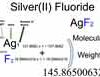
Silver(II) Fluoride (AgF2) Molecular Weight Calculation
Silver(II) fluoride [AgF2] is an inorganic compound of two elements: Silver (Ag) and Fluorine (F). The molecular weight of Silver(II) fluoride is 145.865006326 which can be calculated by adding up the total weight (atomic weight multiplied by their number) of Silver and Fluorine.
Discovery of Helicobacter pylori
Helicobacter pylori was discovered by J R Warren and B Marshall. Their work was published in 1983 in a Journal “The Lancet”.
Genetic Heterogeneity in Helicobacter pylori Strains
Different strains of Helicobacter pylori exhibit high genetic heterogeneity. REFERENCES Research Articles Alm et al., 2000. Comparative genomics of Helicobacter…
Survival Mechanism of Helicobacter pylori in Human Stomach
Helicobacter pylori secretes a urease enzyme that converts urea into ammonia and bicarbonate. This helps to neutralize gastric acid.
![Trichloroethylene [C2HCl3] Molecular Weight Calculation](https://www.laboratorynotes.com/wp-content/uploads/2023/01/fi-trichloroethylene-molecular-weight-calculation-100x65.jpg "Trichloroethylene [C2HCl3] Molecular Weight Calculation")
Trichloroethylene [C2HCl3] Molecular Weight Calculation
Trichloroethylene (C2HCl3) is an organic compound of three elements: Carbon, Hydrogen, and Chlorine. The molecular weight of Trichloroethylene is 131.3875 which can be calculated by adding up the total weight (atomic weight multiplied by their number) of all its elements.
![Antimony(III) Triacetate [Sb(CH3COO)3] Molecular Weight Calculation](https://www.laboratorynotes.com/wp-content/uploads/2023/03/fi-antimonyiii-triacetate-molecular-weight-calculation-100x87.jpg "Antimony(III) Triacetate [Sb(CH3COO)3] Molecular Weight Calculation")
Antimony(III) Triacetate [Sb(CH3COO)3] Molecular Weight Calculation
Antimony(III) triacetate [Sb(CH3COO)3] is an organic compound of four elements: Antimony, Carbon, Hydrogen, and Oxygen. The molecular weight of Antimony(III) triacetate is 298.8926 which can be calculated by adding up the total weight (atomic weight multiplied by their number) of Antimony, Carbon, Hydrogen, and Oxygen.
![Antimony(III) Oxide [Sb2O3] Molecular Weight Calculation](https://www.laboratorynotes.com/wp-content/uploads/2023/03/fi-antimonyiii-oxide-molecular-weight-calculation-100x64.jpg "Antimony(III) Oxide [Sb2O3] Molecular Weight Calculation")
Antimony(III) Oxide [Sb2O3] Molecular Weight Calculation
Antimony(III) oxide [Sb2O3] is an inorganic compound of two elements: Antimony and Oxygen. The molecular weight of Antimony(III) oxide is 291.5182 which can be calculated by adding up the total weight (atomic weight multiplied by their number) of Antimony and Oxygen.
![Aluminium Acetotartrate [C6H7AlO8] Molecular Weight Calculation](https://www.laboratorynotes.com/wp-content/uploads/2023/03/fi-aluminium-acetotartrate-molecular-weight-calculation-100x100.jpg "Aluminium Acetotartrate [C6H7AlO8] Molecular Weight Calculation")
Aluminium Acetotartrate [C6H7AlO8] Molecular Weight Calculation
Aluminum acetotartrate [C6H7AlO8] is an organic compound of four elements: Carbon, Hydrogen, Aluminum, and Oxygen. The molecular weight of Aluminum acetotartrate is 234.0969384 which can be calculated by adding up the total weight (atomic weight multiplied by their number) of Carbon, Hydrogen, Aluminum, and Oxygen.